 How-to
7 Wedding Day Stress Relief Tips to Stay Calm
Last Updated: October 24, 2026
Quick Summary
To relieve wedding day stress, practice slow breathing (four counts in, six counts out, ten times), use 5-4-3-2-1 grounding, take a five-minute break alone, eat and hydrate, and hand your phone to a trusted point person. Building buffer time into your timeline and delegating logistics prevents last-minute panic.
- Breathe in for four counts and out for six, repeated ten times, to steady your heart rate.
- The 5-4-3-2-1 grounding exercise takes under two minutes and pulls attention back to the room.
- Build in 15 extra minutes of buffer before hair and makeup, first look, and ceremony start.
- Pack the emergency kit two weeks before the wedding, not the night before.
- Assign coordination to a professional, not a friend or family member who should be celebrating.
Table of Contents
- Why Wedding Day Stress Hits Even When Planning Is Done
- How to Stay Calm on Your Wedding Day: 7 Relief Tips That Work
- Wedding Day Timeline Tips That Prevent Last-Minute Panic
- Build a Wedding Day Emergency Kit for Calm and Control
- Wedding Coordinator Responsibilities That Take Stress Off Your Plate
- Check Your Date and Hand Off the Logistics
- Frequently Asked Questions
Why Wedding Day Stress Hits Even When Planning Is Done
Wedding day stress does not disappear when the last vendor contract is signed. This guide from CANA EVENTS covers how to stay calm on your wedding day, from breathing techniques to handing off logistics so you can enjoy the ceremony you built.
Because planning stress and day-of stress are different animals. The American Psychological Association's guidance on stress management notes that the body's stress response often intensifies during waiting periods, not just during active challenges.
Most guides treat wedding-day nerves as a planning problem. It is a nervous system problem, and it needs a nervous system answer.
Below: seven relief tips, a time-based plan, an emergency kit, and the one move that removes most of the stress before it starts.
How to Stay Calm on Your Wedding Day: 7 Relief Tips That Work
Staying calm on your wedding day comes down to preparation, breathing, and giving your brain something concrete to do. Practice these seven tips before the wedding, not on the morning of.

- Breathe slowly and deliberately. Four counts in, six counts out, repeated ten times.
- Use grounding to stay present. Name five things you can see, four you can hear, three you can touch.
- Take a real break. Step into a quiet space for five minutes, alone.
- Eat and drink water. Snacks and hydration beat caffeine and champagne before the ceremony.
- Delegate the small stuff. Hand your phone to a trusted person and stop fielding questions.
- Set boundaries with family and vendors. One point of contact handles both.
- Move your body. A short walk or stretch releases the tension sitting in your shoulders.
Breathe Slowly to Reset Your Nervous System
Slow breathing is the fastest stress relief tool you already own. Extending your exhale longer than your inhale signals your nervous system to shift out of fight-or-flight mode.
Try this before you get dressed: sit down, close your eyes, breathe in for four counts, out for six, ten times. That is two minutes, and your heart rate will drop and your hands will steady.
A common mistake is breathing too fast and calling it deep breathing. Fast, shallow chest breaths do the opposite of what you want. Breathe into your belly and let the exhale be the slow part.
Use Grounding to Stay Present
Grounding pulls your attention out of the future and back into the room. Overthinking thrives on "what if," and grounding gives your brain a sensory task instead.
The 5-4-3-2-1 method works anywhere:
- Name 5 things you can see
- Name 4 things you can hear
- Name 3 things you can touch
Do this in the bridal suite, in the car, or thirty seconds before you walk down the aisle. It takes under two minutes and nobody will notice.
Here are the seven relief tips, each with what to do and how much time it takes.
| Tip | What to do | Time or frequency |
|---|---|---|
| Breathe slowly and deliberately | Four counts in, six counts out | Repeated ten times |
| Use grounding to stay present | Name five things you see, four you hear, three you touch | Under two minutes |
| Take a real break | Step into a quiet space, alone | Five minutes |
| Eat and drink water | Snacks and hydration beat caffeine and champagne | Before the ceremony |
| Delegate the small stuff | Hand your phone to a trusted person | For the day |
| Set boundaries with family and vendors | One point of contact handles both | For the day |
| Move your body | A short walk or stretch | When tension builds |
Wedding Day Timeline Tips That Prevent Last-Minute Panic
Wedding day timeline tips work best when they build in buffer time rather than packing the schedule tight. What lowers day-of stress is a time-based schedule with a calming action attached to each transition, because transitions, not tasks, are where nerves spike. Here is a practical framework you can adapt to your own start time.
The Morning Block (4-5 Hours Before the Ceremony)
- Wake-up + 10 minutes alone. Before anyone arrives, sit with a glass of water and do ten slow breaths (four counts in, six counts out). This is your only guaranteed quiet moment of the day.
- Eat a real breakfast. Protein and complex carbs, not just coffee. Low blood sugar mimics anxiety, shaky hands, racing heart, and you will misread it as nerves.
- Hand your phone to your point person. From this moment, every vendor question routes through them, not you.
The Final Hour Before the Ceremony
- 20 minutes out: quiet block. Step into a separate room alone. No phone, no well-wishers, no last-minute questions. Ten minutes is enough; twenty is better.
- 10 minutes out: grounding. Run the 5-4-3-2-1 exercise. It pulls your attention out of "what if" and into the room.
- 5 minutes out: physical reset. Roll your shoulders, unclench your jaw, shake out your hands. Tension hides in the shoulders and jaw, and releasing it before you walk is faster than trying to relax mid-aisle.
The Ceremony and Immediately After
- Before you walk: one slow exhale. A single long exhale lowers your heart rate more reliably than a deep inhale. Do it at the back of the aisle, not while you are already moving.
- During the ceremony: anchor to one person. Pick a familiar face in the front row and return your gaze there when the room overwhelms you.
- Right after: five minutes with your partner. Before the receiving line, photos, or guests, take five minutes alone together, the most common advice from couples who say their day felt calm.
Photos and Reception
- Photos: schedule a snack break. Photo sessions routinely run long. Ask your point person to bring water and a snack to the photo location so hunger does not compound fatigue.
- Before the reception entrance: one breath, one sentence. Decide in advance on a single sentence that reminds you what the day is about ("These are our people"). Say it before you walk in.
- During the reception: one scheduled break. Even ten minutes away from the crowd, a quiet hallway, an empty room, resets your energy for the second half of the night.
Why the Buffer Matters More Than the Schedule
A timeline with breathing room prevents the panic that comes from running late. Build in 15 minutes of buffer before every major moment, hair and makeup, first look, ceremony start, and set a hard cutoff for vendor setup, not just a start time.
The timeline is also where a wedding planner earns their keep. A coordinator manages the schedule in real time so you never check a clock, and so the buffer you built actually gets used.
Build a Wedding Day Emergency Kit for Calm and Control
A wedding day emergency kit is a small bag of practical items that solves the most common day-of problems in seconds. Knowing it exists lowers your baseline anxiety before anything goes wrong. But the kit is only half the tool. The other half is knowing what to do when the problem is not something a stain pen can fix.
What Goes in the Kit
Pack these:
- Sewing kit with matching thread
- Stain remover pen
- Blister bandages and heel cushions
Give the kit to one person. That person is now your problem-solver, and you stop carrying the mental load of "what if the strap breaks."
The Contingency Framework: What to Do When Something Goes Wrong
Most wedding-day stress advice stops at the kit. The more useful skill is a decision framework you hand to your point person so problems get handled without reaching you. Use this three-question sequence for any disruption:
- Is anyone unsafe or unwell? If yes, that is the only priority. Everything else waits. Your point person calls the appropriate professional and informs you only after it is handled.
- Does this affect the ceremony start time? If yes, your point person and the coordinator decide on a delay and communicate it to guests and vendors. You are told the new time, not the problem.
- Can it be solved in under five minutes with the kit or a phone call? If yes, solve it silently. If no, it becomes a coordinator decision, not a couple decision.
Common Scenarios and the Calm Response
- A vendor runs late. The coordinator adjusts the timeline and notifies affected parties. Most delays are absorbed by the buffer you built in.
- Weather changes. Have a rain plan agreed on in writing before the day. If the ceremony moves indoors, the coordinator makes the call at a pre-set time, not in a panic ten minutes before start.
- A missing item (rings, vows, shoes). This is what the point person and printed contact list are for. One phone call, one search, and you are told only when it is resolved.
When Nerves Are More Than Nerves
Ordinary wedding-day nerves come and go and ease once the ceremony starts. But some people experience panic symptoms, a racing heart that will not slow, shortness of breath, chest tightness, or detachment, that do not respond to breathing and grounding. If you have a history of anxiety or panic, talk to a qualified professional before the wedding about a plan.
The kit solves the small stuff. The framework solves the big stuff. Together they mean almost nothing on your wedding day requires a decision from you.
Wedding Coordinator Responsibilities That Take Stress Off Your Plate
Wedding coordinator responsibilities center on the logistics you should not be handling on your own wedding day.
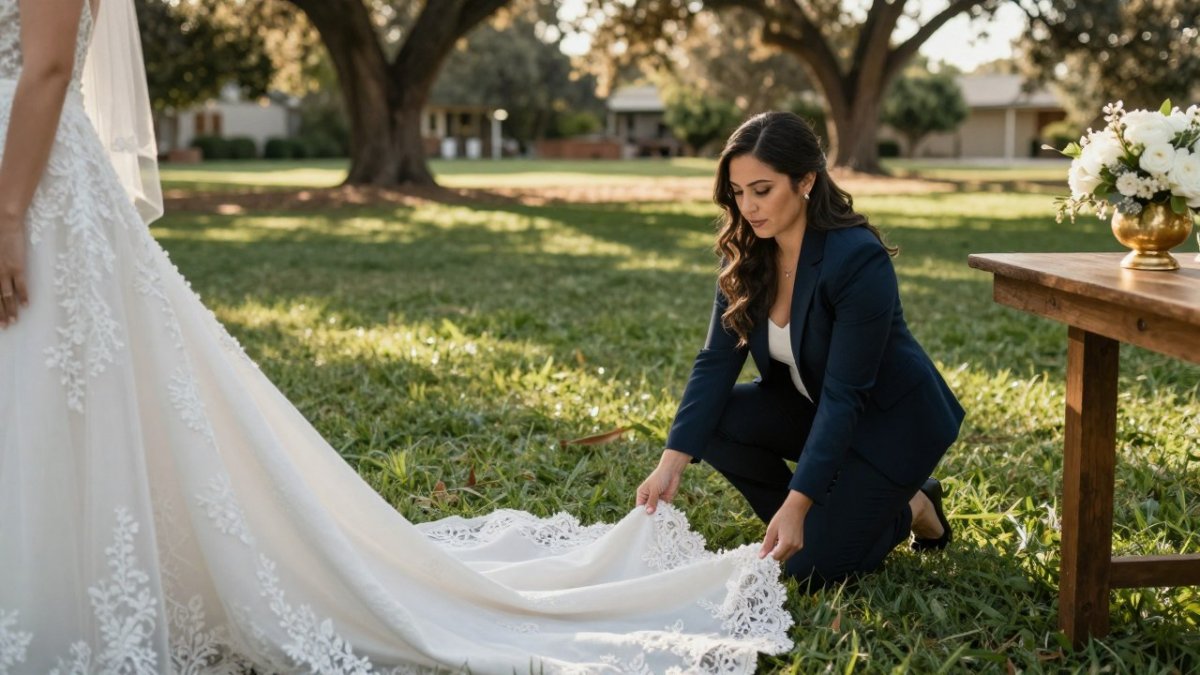
This is where we do our best work at CANA EVENTS. Janett and Amber have hands-on experience from more than 20 weddings, managing vendor communication, cultural traditions, and every behind-the-scenes detail.
Watch out: the biggest mistake couples make is assigning coordination to a friend or family member. That person ends up working instead of celebrating, and you end up managing them.
Check Your Date and Hand Off the Logistics
The single most effective wedding day stress relief tip is handing off the logistics entirely. You cannot fully relax while you are still the person everyone asks questions to.
Here is the handoff checklist we use:
- Confirm your date and lock in your coordinator
- Transfer the vendor contact list to one point of contact
- Share the final timeline and floor plan
That last item matters more than it sounds. Every notification is a small stress spike. Let someone else answer them.
Frequently Asked Questions
How do I stop overthinking on my wedding day?
Overthinking usually spikes when you have no clear job and too much time to watch the clock. Give yourself a simple anchor: a short breathing routine, a written timeline you trust, and one person assigned to field questions. When a worry pops up, write it down and hand it to your coordinator or a trusted helper instead of solving it yourself. Staying present with the people in front of you is the fastest way to quiet a racing mind.
What should go in a wedding day emergency kit?
Pack a sewing kit, safety pins, stain remover wipes, blotting papers, makeup touch-ups, hair grips, pain reliever, bandages, snacks, water, and a phone charger. Add a copy of your vendor contacts and timeline. Keep the kit with a designated person, not buried in a getting-ready room. A small kit solves most minor wedding day stress moments before they become big ones.
What should you do if something goes wrong on your wedding day?
Pause, breathe, and ask one question: who owns this problem? If you have a coordinator, hand it over and let them fix it while you stay out of the room. If you don't, assign a decisive friend or family member in advance. Most issues, from a late vendor to a torn hem, are solvable in minutes. Your only job is to keep your attention on the ceremony and the people you love.
How can a wedding day timeline reduce stress?
A realistic timeline removes the constant mental math of what comes next. Build in buffer time between major moments, share the schedule with every vendor and your wedding party, and mark who is responsible for each transition. When everyone knows the plan, you stop being the default answer desk. That single shift is often the difference between a frantic morning and a calm one.
If you want to spend your wedding day present instead of managing vendors, timelines, and last-minute surprises, CANA EVENTS is built for exactly that. We handle vendor communication, setup and teardown, cultural traditions, and unexpected issues so you can simply enjoy the day. Get started with CANA EVENTS and check your date to see how a dedicated wedding-day team can take the logistics off your plate.