 How-to
Day-of Wedding Coordination Services Explained
Last Updated: October 25, 2026
Quick Summary
Day of wedding coordination services are professional planning support focused on executing your wedding day, not designing it. Real coordination begins two to four weeks before the ceremony, when your coordinator collects vendor contracts, confirms arrival times, and builds a minute-by-minute schedule so you can be a guest at your own event.
- Most coordinators start two to four weeks out with a document review of contracts, floor plans, shot lists, and menus.
- A coordinator executes a wedding you have already planned, while a planner designs it from day one.
- Day-of coordinator cost is usually a flat fee built from scope, not hours, and quotes vary widely.
- Build your timeline backward from the ceremony time and add 15-minute buffers between major moments.
- Ask for a written quote separating base fee, setup and tear-down, rehearsal coverage, travel, and overtime.
Table of Contents
- What Day-of Wedding Coordination Services Actually Include
- Wedding Day Coordinator Duties From Setup to Send-Off
- Coordinator vs Planner: Who Handles What
- Day-of Wedding Coordinator Cost and What Drives It
- Building a Wedding Day Timeline Template That Works
- Questions to Ask a Wedding Coordinator Before You Book
- Check Your Date and Get a Quote From CANA EVENTS
- Frequently Asked Questions
What Day-of Wedding Coordination Services Actually Include
Day-of wedding coordination services are professional planning support focused on executing your wedding day, not designing it, and that is exactly what day of wedding coordination services means in practice. According to The Knot's wedding planning resources, couples increasingly hire coordinators to protect the day itself, and at CANA EVENTS we see the same pattern: the couples who enjoy their wedding most are the ones who handed off logistics weeks earlier.
Here is the part most guides get wrong. "Day-of" is a misleading label. Real coordination begins weeks before the ceremony, when your coordinator collects vendor contracts, confirms arrival times, and builds a minute-by-minute schedule.
Day-of coordination is the practice of handing your finished wedding plans to a professional who manages vendors, timelines, and logistics on the wedding day so you can be a guest at your own event.
When the Work Really Begins
Most coordinators start two to four weeks out. The first pass is a document review: contracts, floor plans, shot lists, and menus. Then comes vendor communication, where your coordinator introduces themselves and confirms load-in times. A final walkthrough usually happens in the last week. By the morning of your wedding, the planning is done and only execution remains.
Wedding Day Coordinator Duties From Setup to Send-Off
Wedding day coordinator duties run from early setup through final tear-down. Expect your coordinator to arrive hours before guests, direct vendor load-in, keep the schedule on track, and solve problems quietly before you notice them.
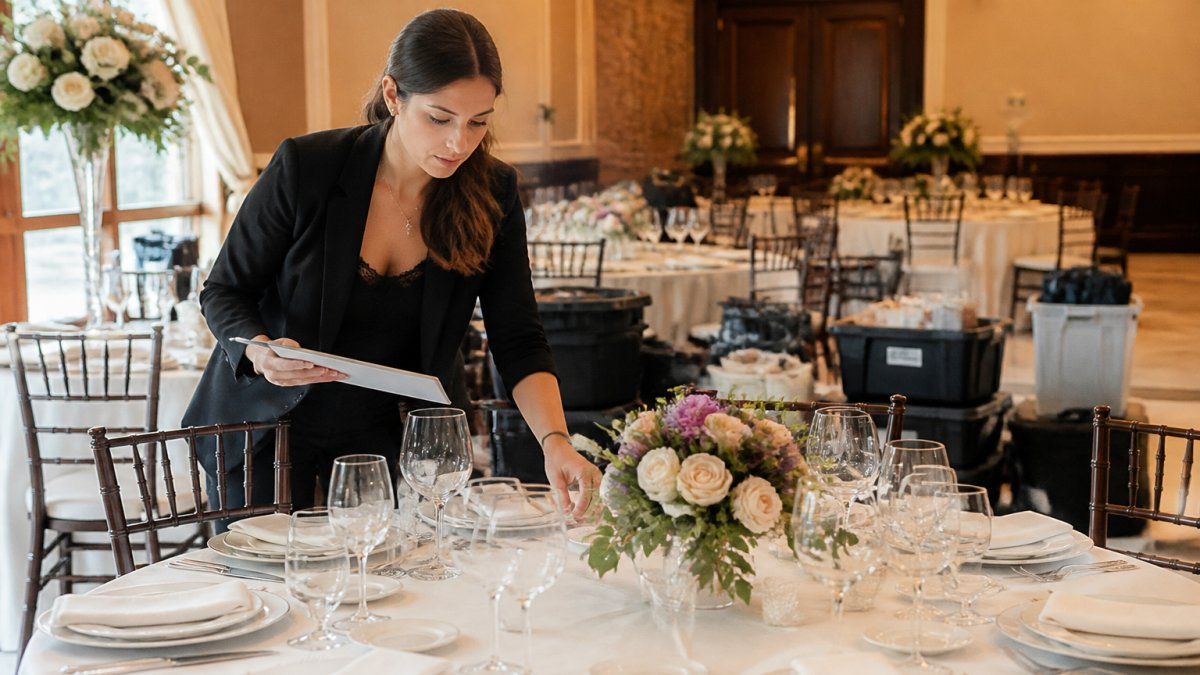
A typical day looks like this:
- Setup: Oversee decor placement, seating cards, and ceremony layout
- Vendor check-in: Confirm each vendor arrived and knows their cue
- Ceremony: Cue the processional, manage the aisle, hold the rings and license
- Reception: Coordinate toasts, dinner service, and first dances
- Send-off: Gather gifts, pack personal items, and manage tear-down
The best coordinators stay invisible. If you can see them sprinting, something has gone wrong.
Coordinator vs Planner: Who Handles What
A coordinator executes a wedding you have already planned. A planner designs it. That distinction decides your budget and your timeline.
Full wedding planning covers venue selection, design, vendor sourcing, and budget management from day one. Partial planning sits in between. Coordination picks up after the plans exist.
| Responsibility | Planner | Coordinator |
|---|---|---|
| Venue and vendor sourcing | Yes | No |
| Design and decor direction | Yes | Executes your vision |
| Budget management | Yes | No |
| Timeline creation | Yes | Finalizes and runs it |
| Day-of vendor communication | Sometimes | Yes |
| Setup and tear-down oversight | Rarely | Yes |
If your venue is booked and your vendors are signed, you need day of wedding coordination services. If you are still choosing a photographer, you need a planner.
Day-of Wedding Coordinator Cost and What Drives It
Day-of wedding coordinator cost is usually quoted as a flat fee rather than an hourly rate, and the fee is built from scope, not from the number of hours you happen to be awake on your wedding day. Most quotes land somewhere between a few hundred dollars for a very small, single-venue event and several thousand dollars for a full weekend of events with heavy setup and tear-down. We do not publish fixed rates because the inputs change so much from wedding to wedding; request a quote and we will price against your actual vendor list and venue.
What actually moves the number:
- Number of vendors under management. A wedding with a venue, caterer, photographer, DJ, florist, baker, and officiant has seven contracts to confirm, seven arrival windows to sequence, and seven points of failure on the day. Each additional vendor adds confirmation calls, load-in coordination, and a person your coordinator has to track.
- Setup and tear-down scope. Placing centerpieces and seating cards is a different job from receiving rentals, dressing tables, hanging signage, and packing everything out at midnight. Full decor handling is the single most common reason a quote climbs.
- Venue rules and access windows. Venues that give you a two-hour load-in window and require everything out the same night compress the labor into a shorter, more expensive block. Venues with an on-site event manager who handles vendor check-in reduce coordinator hours.
- Event length and overtime. A six-hour reception with a defined end time is easy to price. A reception that runs long, or a venue with a hard curfew and a late start, creates overtime. Ask how overtime is billed before you sign.
- Travel. Coordinators commonly charge for mileage or drive time beyond a local radius, and destination or multi-day events add travel, lodging, and per-diem costs. Get the radius and the rate in writing.
- Rehearsal coverage. Some quotes include the rehearsal dinner or the ceremony rehearsal; some charge it as an add-on. Confirm which one you are buying.
- Guest count and cultural traditions. A 250-guest wedding with a multi-part ceremony needs more staff on site than a 60-guest wedding with a single ceremony. More staff means more labor hours.
A common pattern is for couples to treat coordination as the line item to cut last. The math rarely works: one missed vendor arrival, one late shuttle, or one unstaffed tear-down can cost more in rentals, overtime, or lost deposits than the coordination fee itself. If your budget is tight, ask for a narrower scope, for example, timeline and vendor confirmation without full decor setup, rather than dropping coordination entirely.
Building a Wedding Day Timeline Template That Works
A wedding day timeline template is a minute-by-minute schedule covering vendor arrivals, ceremony cues, reception events, and departure. Build it backward from your ceremony time, then add buffer everywhere.
Use this structure:
- 6 hours before ceremony: Coordinator arrives, vendor load-in begins
- 3 hours before: Decor and florals placed, sound check complete
- 90 minutes before: Wedding party dressed, photos started
- 30 minutes before: Guests seated, vendors in position
- Ceremony: Processional, vows, recessional
- Reception: Cocktail hour, dinner, toasts, dancing
- Send-off: Exit, tear-down, gift collection
Add 15-minute buffers between major moments. A timeline with no slack breaks the first time a photographer runs long.
Questions to Ask a Wedding Coordinator Before You Book
Ask direct questions about scope, staffing, and emergencies, and listen for specifics rather than reassurance. The answers tell you more than any brochure, and the contract should back up what you hear.
Scope and timing
- When does your work actually begin, two weeks out, four weeks out, or the morning of? A true day-of coordinator who only shows up on the wedding day is a different, cheaper service than one who starts weeks earlier.
- What exactly is included in setup and tear-down? Ask for the list in writing: who receives rentals, who places decor, who packs gifts and personal items, and who returns rented items.
- Is the rehearsal covered, and is the rehearsal dinner covered? These are often separate line items.
Staffing and backup
- Will you personally be on site, or will staff run the day? If staff, how many people, and who is the named on-site lead?
- How many weddings do you take per weekend? A coordinator running two events on the same day is a backup-plan question, not a disqualifier, but you need to know.
- What happens if you get sick or have an emergency? Ask for the backup plan and the name of the person who would step in.
Vendor and contingency management
- How do you handle a vendor who does not show up or arrives late? Listen for a process: who calls, what is the backup vendor list, and how is the timeline adjusted.
- What is your plan for weather or timing delays? Outdoor ceremonies need a rain call time and a decision-maker named in advance.
- How do you learn and honor our cultural customs? Ask for an example of a tradition you have built into a timeline rather than improvised on the day.
- How do you communicate with us before the wedding and on the day? Email, shared document, group text, or a planning app, pick one and confirm response times.
Contract details to verify
- Named on-site lead. The contract should name who is responsible on the day, not just the company.
- Overtime rate. Confirm the hourly rate and how it is triggered, by the clock, by vendor delays, or by guest departure.
- Cancellation and rescheduling terms. Ask what happens to the deposit if you postpone, and whether the fee is refundable.
- Deliverables list. The timeline, vendor confirmation log, and day-of schedule should be listed as deliverables with delivery dates.
- Insurance. Ask whether the coordinator carries liability coverage; many venues require it.
- Payment schedule. Know the deposit amount, the balance due date, and whether the final payment is due before or after the wedding.
At CANA EVENTS, our team brings hands-on experience from 20+ weddings, managing timelines, vendor communication, and cultural traditions, including setup and tear-down. We work with intimate weddings of about 75 guests just as carefully as larger events. If you have specific customs, tell us early so we can build them into the timeline rather than improvise.
Check Your Date and Get a Quote From CANA EVENTS
Your wedding day should feel like a celebration, not a shift. The couples who enjoy it most are the ones who trusted a professional with the logistics and let go.
CANA EVENTS handles timeline management, vendor coordination, cultural traditions, and behind-the-scenes setup and tear-down, so unexpected issues get resolved before they reach you. Our wedding-day besties approach means you get support, not supervision.
Check your date and get a quote from CANA EVENTS today.
Frequently Asked Questions
What do day-of wedding coordinators do?
A day-of coordinator manages the logistics of your wedding day so you don't have to. That includes running the wedding day timeline, directing vendor arrivals and setup, coordinating the ceremony and reception flow, handling teardown, and solving problems as they come up. Most coordinators also start work weeks before the wedding, confirming vendor details and building the schedule. At CANA Events, our team also manages cultural traditions and captures behind-the-scenes content while keeping everything on track.
How much do day-of wedding coordination services cost?
Day-of wedding coordinator cost varies based on your guest count, venue, number of vendors, cultural traditions, and how many hours of coverage you need. Because every wedding has different logistics, pricing is quoted per event rather than pulled from a fixed rate card. The best way to get an accurate number is to share your date and details with a coordinator directly. CANA Events provides custom quotes, so check your date and request pricing for a figure that fits your wedding.
When should you hire a day-of wedding coordinator?
Book your coordinator as soon as your venue and date are locked in, ideally six to twelve months out. Popular dates fill quickly, and having a coordinator in place early means vendor contracts and timelines get reviewed before problems develop. Even if you hire later, most coordinators can step in a few months before the wedding, but the sooner you hand off logistics, the less you carry yourself. Ask about availability before you finalize other big bookings.
What questions should you ask before hiring a wedding day coordinator?
Ask how many weddings they have coordinated, what their package includes, when their work begins, and how they handle vendor communication. Confirm whether setup and teardown are covered, how they manage unexpected issues, and whether they have experience with your cultural traditions. Request a sample wedding day timeline template and ask about their backup plan if something goes wrong. Also clarify the contract terms, payment schedule, and how many staff members will be on site.