 Comparison
Wedding Content Creator vs Photographer: Which Do You Need?
Last Updated: November 4, 2026
Quick Summary
In the content creator vs photographer comparison, a photographer delivers a high-resolution edited gallery weeks to months later for your family archive, while a content creator delivers phone-shot vertical video and candid photos within hours to days for your social feed. Neither replaces the other, so budget for photography first and add a creator with what remains.
- A photographer's gallery arrives weeks to months after the wedding, while a creator delivers clips within hours to days.
- A content creator is not a replacement for a photographer or videographer because equipment and archival quality differ too much.
- Fund photography and videography first, then price a creator against what is left in your media budget.
- Four hours of creator coverage around high-emotion windows often beats a full-day package when budgets are tight.
- Copyright in your wedding media starts with the person who shot it unless your contract assigns it to you in writing.
Table of Contents
- Content Creator vs Photographer: A Side-by-Side Comparison
- What Does a Wedding Content Creator Do?
- What a Wedding Photographer Delivers (and What They Don't)
- Key Differences in Deliverables and Turnaround Time
- Is a Content Creator a Replacement for a Photographer or Videographer?
- Wedding Content Creator Cost: What to Expect and How to Budget
- Vendor Coordination Logistics: How Creators and Photographers Work Together
- Legal and Copyright Implications for Your Wedding Media
- Wedding Social Media Content Tips for Couples
- Deciding What to Book: A Buyer's Checklist
- Frequently Asked Questions
Content Creator vs Photographer: A Side-by-Side Comparison
Comparing wedding day content creation vs photography starts with one distinction: a photographer documents the day for history, while a content creator documents it for the feed. Both capture your wedding, but they serve different audiences, timelines, and purposes. Couples often overspend on one of these while underestimating the other. Below, we break down what each role actually delivers so you can budget with clear eyes.
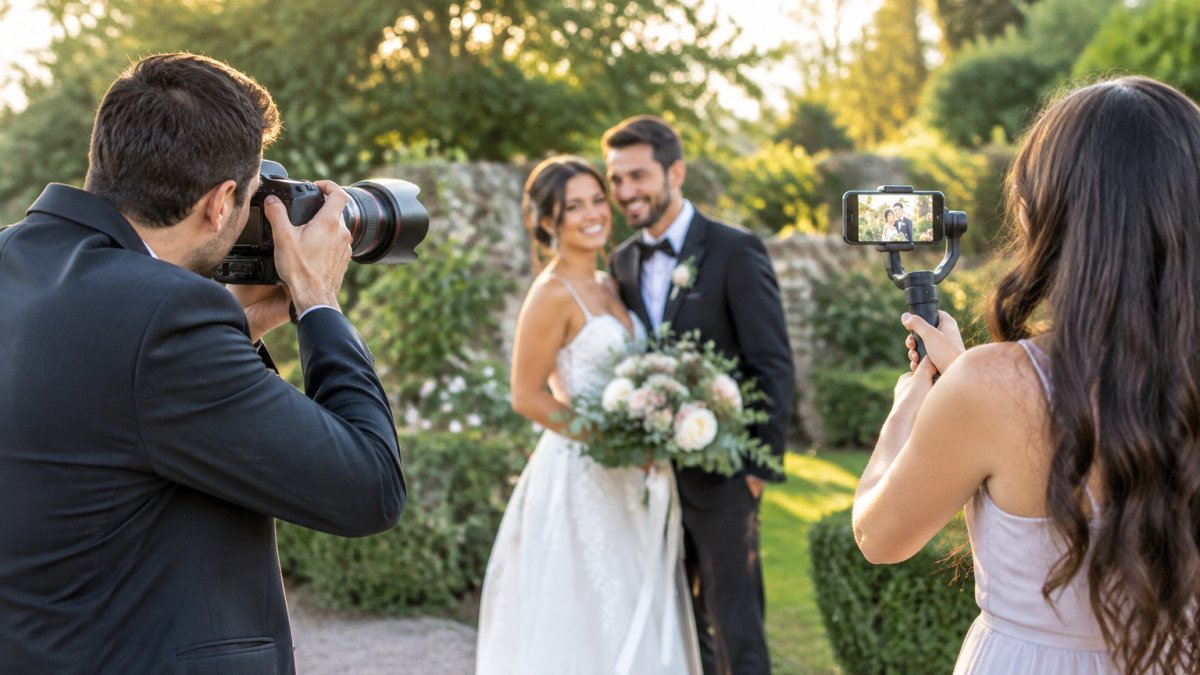
Here is the short version of the content creator vs photographer debate: neither replaces the other, and couples who understand the difference plan better weddings.
| Factor | Photographer | Content Creator |
|---|---|---|
| Primary output | High-resolution edited gallery | Short-form video and photo drops |
| Turnaround | Weeks to months | Hours to days |
| Style | Posed and candid fine art | Candid, mobile-first, trendy |
| Audience | Family archive | Social feed and guests |
| Coverage style | Structured shot list | Unobtrusive, behind-the-scenes |
What Does a Wedding Content Creator Do?
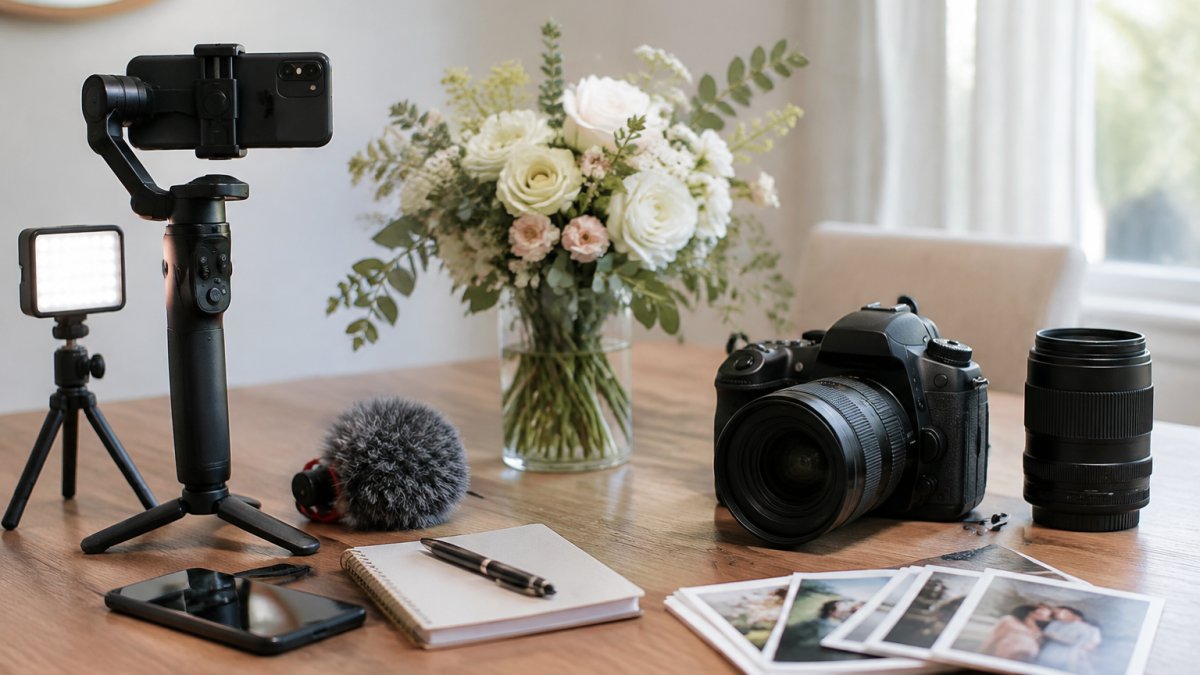
A wedding content creator captures your day on a phone-first setup, shooting vertical video and candid photos for social media while the event unfolds. They film the getting-ready chaos, the first look reactions, the dance floor, and the small moments a formal gallery might skip.
The role is part documentarian, part hype person. Expect behind-the-scenes clips, guest reactions, and quick social media deliverables like reels and TikTok-style edits. That speed is the whole point: your guests are still awake, and the moment is still fresh.
What a Wedding Photographer Delivers (and What They Don't)
A wedding photographer delivers a curated gallery of high-resolution, professionally edited images. That gallery is the long game: archival prints, albums, parent gifts, and images that hold up on a wall for decades.
What they do not deliver is speed or volume. A photographer might shoot hundreds of frames and cull them to a tight, polished set. They work with creative direction, lighting, and staging to build a cohesive visual story. They are not chasing trends, and they are not posting to your feed. If you want a cinematic record of the day, that is photography and professional videography territory.
Key Differences in Deliverables and Turnaround Time
Deliverables and turnaround time are where these two services diverge most. A photographer hands over a finished, edited gallery weeks later. A content creator hands over phone-shot clips and photos within days, sometimes hours.
Think of it as archive versus immediacy. The photographer protects memory preservation; the creator feeds your digital footprint while the excitement is live. One produces a polished film or gallery, the other produces digital assets built for a mobile-first audience. Both are legitimate, and smart couples budget for both when the guest list and timeline allow.
Is a Content Creator a Replacement for a Photographer or Videographer?
No. A content creator is not a replacement for a photographer or videographer. The equipment, editing pipeline, and archival quality differ too much.
This is where couples get talked into a false choice. A creator's phone footage will not print at album size, and a photographer's gallery will not arrive in time for a same-night reel. Professional videography and photography carry the technical weight; the creator adds reach and speed. Treat them as complementary roles on the same wedding day timeline, not as substitutes.
Wedding Content Creator Cost: What to Expect and How to Budget
Wedding content creator cost is not a single number, and any article that hands you one is guessing. What you can do is understand the pricing mechanics so you can compare quotes apples to apples and slot a creator into your budget without gutting photography or videography.
Most creators price on one of three models. Hourly coverage bills for the hours they are on site, usually with a minimum block. Package pricing bundles a set number of coverage hours with a defined deliverable count, say, a set of vertical reels plus a batch of candid stills, and prices the bundle. Day-rate or event-rate pricing charges a flat fee for the whole event regardless of hours, which protects you if the timeline runs long but costs more if you only need a few hours. Ask which model a quote uses before you compare two numbers, because an hourly quote and a day-rate quote for the same wedding are not the same product.
The variables that move the price most are coverage hours, turnaround speed, deliverable volume, travel, and whether a second shooter or assistant is included. Same-day or next-day delivery commands a premium because it compresses the editing window. Raw-footage-only packages cost less than fully edited reels. A creator who travels outside their home area will add a travel line. None of these are hidden fees, they are the levers you can pull to fit a budget.
A practical budget allocation sequence: fund photography and videography first, because they carry the archival load and cannot be recreated after the day. Then price a creator against what is left, and decide whether partial-day coverage gets you the moments you actually care about, getting ready, the first look, the dance floor, rather than paying for hours you will not use. If the budget is genuinely tight, a creator covering four hours around the highest-emotion windows often delivers more usable content than a full-day package that spreads the same spend thin.
Vendor stacking is where couples overspend without noticing. Photography, videography, and content creation are three separate line items, and each vendor will quote as if their service is the priority. Build one media budget, list all three, and decide the split before you talk to any of them. A common pattern is to anchor on photography, add videography if storytelling matters, and treat content creation as the flexible layer that scales up or down with the remaining funds.
Watch out: confirm exactly what a lower quote includes, such as coverage hours, editing, and delivery timing, before treating it as the budget-friendly option.
For current pricing and a quote tailored to your wedding, visit the CANA EVENTS website.
Vendor Coordination Logistics: How Creators and Photographers Work Together
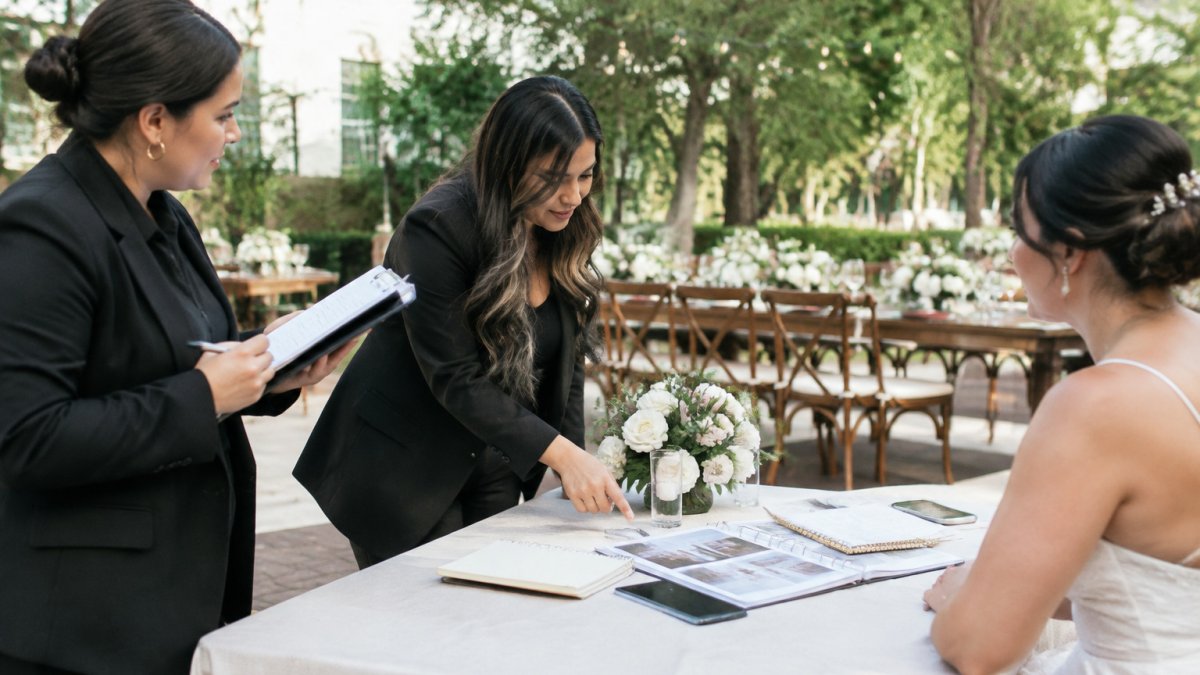
Creators and photographers work together best when someone owns the vendor coordination and protects each vendor's space. A photographer needs clear sightlines and an unobstructed first look. A creator needs to move through the room without stepping into the shot.
The fix is a shared timeline and a short brief before the day. Tell the photographer where the creator will stand, and tell the creator when to hang back during formal portraits. Vendor collaboration like this keeps both teams unobtrusive and keeps you out of the middle. This is exactly the kind of vendor stacking logistics a day-of coordinator handles so you do not have to referee it yourself.
Legal and Copyright Implications for Your Wedding Media
This is the section most comparisons skip, and it is the one that causes the most friction after the wedding. Copyright in your wedding media generally starts with the person who shot it, the photographer, the videographer, or the content creator, not with you, unless your contract assigns it to you in writing (Chapter 2 - Circular 92). What you usually receive is a license to use the files, and the scope of that license is where couples get surprised.
The nuance competitors miss is that your media comes from two very different pipelines with two different contracts. Professional camera files, the photographer's gallery and the videographer's film, are typically governed by a contract that grants you a personal-use license, retains the vendor's copyright, and often includes a clause letting the vendor post selected images for portfolio and marketing. Phone-shot content from a creator is governed by a separate agreement, and that agreement may treat the raw vertical clips differently: some creators hand over the files with broad personal-use rights, others retain ownership and license the edits back to you, and some restrict how you can repost or monetize the footage. Read both contracts, not just the photographer's.
Three questions settle most of it. First, who owns the files, the vendor, or you by assignment? Second, what can you do with them: print, share, post, submit to a publication, or use in a future business? Third, can the vendor post your images publicly, and can you opt out? If privacy matters, a private ceremony, guests who do not want to appear online, cultural or religious considerations, ask for a model release and a publicity clause you can live with, and get the answer in writing before the day.
Watch out: a verbal 'you can use the photos however you want' is not a license. If it is not in the contract, assume the default copyright rules apply and the vendor holds the rights.
The U.S. Copyright Office guidance on ownership and transfers explains how copyright ownership and transfer work in plain terms, and it is worth a look before you sign either agreement. Confirm sharing, credit, and tagging terms for both your photographer and your creator in writing so there are no surprises after the honeymoon.
Wedding Social Media Content Tips for Couples
Good wedding social media content starts with a plan, not a scramble. These wedding social media content tips keep your feed strong without pulling you away from your own party.
- Agree on a hashtag and share it with guests before the day
- Ask your creator for a shot list of must-have moments
- Set a posting schedule so clips go out while guests are still engaged
- Confirm credit and tagging terms with each vendor
- Back up every file to cloud storage within a week
- Keep raw footage archived, not just the edited cuts
Hand the posting to your creator or coordinator so you stay present. The best content strategy is the one that runs without you.
Deciding What to Book: A Buyer's Checklist
Decide based on what you value more: a permanent archive or a live, shareable record. Most couples want both, so the real question is how to sequence the spend.
Use this checklist to settle it:
- Do you want album-quality prints? Book a photographer.
- Do you want video storytelling? Add a videographer.
- Do you want same-night reels and guest-facing clips? Add a creator.
- Is your budget fixed? Prioritize photography, then add a creator if funds allow.
- Will someone manage vendor coordination? Confirm who owns the timeline.
If you want a team that handles the behind-the-scenes logistics and captures the day at the same time, CANA EVENTS offers day-of wedding coordination and content creation.
The hardest part of this decision is not choosing a photographer or a creator. It is keeping both teams coordinated so nothing collides on the day. CANA EVENTS offers day-of wedding coordination and content creation, with hands-on experience from 20+ weddings, managing timelines, vendor communication, cultural traditions, and setup and tear-down so you can enjoy the day. Get started with CANA EVENTS and check your date for a quote.
Frequently Asked Questions
What is the difference between a wedding photographer and a wedding content creator?
A wedding photographer uses professional cameras and lenses to capture high-resolution, posed and candid images that become your formal album. A wedding content creator shoots short-form video and behind-the-scenes moments on a smartphone, often delivering reels and TikTok-style clips within days. Photographers focus on timeless, print-ready images; creators focus on social-media-ready footage and fast turnaround. Many couples hire both because the deliverables serve different purposes: one preserves memories for family and framing, the other fuels your digital footprint while the day is still fresh.
Is a wedding content creator worth the extra cost?
It depends on how much you value quick, shareable footage. Content creators offer quick, shareable clips that many photographers and videographers do not focus on delivering. If you want a steady stream of behind-the-scenes moments for Instagram or TikTok, and you like the idea of a second set of eyes capturing candid interactions, the cost can be justified. Couples who prefer a polished film and a traditional album may find it less essential.
Can a wedding content creator replace a professional videographer?
No. A content creator captures short-form, mobile-first clips for social media, often with minimal staging and fast turnaround. A professional videographer uses cinema-grade cameras, external audio, and cinematic storytelling to produce a polished film that stands up to repeated viewing. If you want a full-length highlight film with clear vows and speeches, you still need a videographer. A content creator is a complement, not a replacement, for professional videography.
How do wedding content creators work alongside photographers?
Good creators coordinate with your photographer in advance to avoid blocking shots or duplicating angles. They stay unobtrusive during formal portraits and focus on candid, behind-the-scenes moments that photographers may miss, like guests dancing or quiet reactions. Clear communication about the wedding day timeline and vendor collaboration ensures both teams capture what they do best without stepping on each other's toes. Ask both vendors if they have worked together before or if they are open to a quick pre-wedding call.
What kind of footage does a wedding content creator provide?
Expect raw footage and edited short-form video: reels, TikTok-style clips, and behind-the-scenes moments of getting ready, first looks, and guest reactions. Deliverables usually include vertical video formatted for mobile, sometimes with music or simple text overlays. Turnaround time varies by creator, so confirm timing before booking. Ask potential creators for a sample of their social media deliverables and confirm how many final clips you receive and in what resolution.